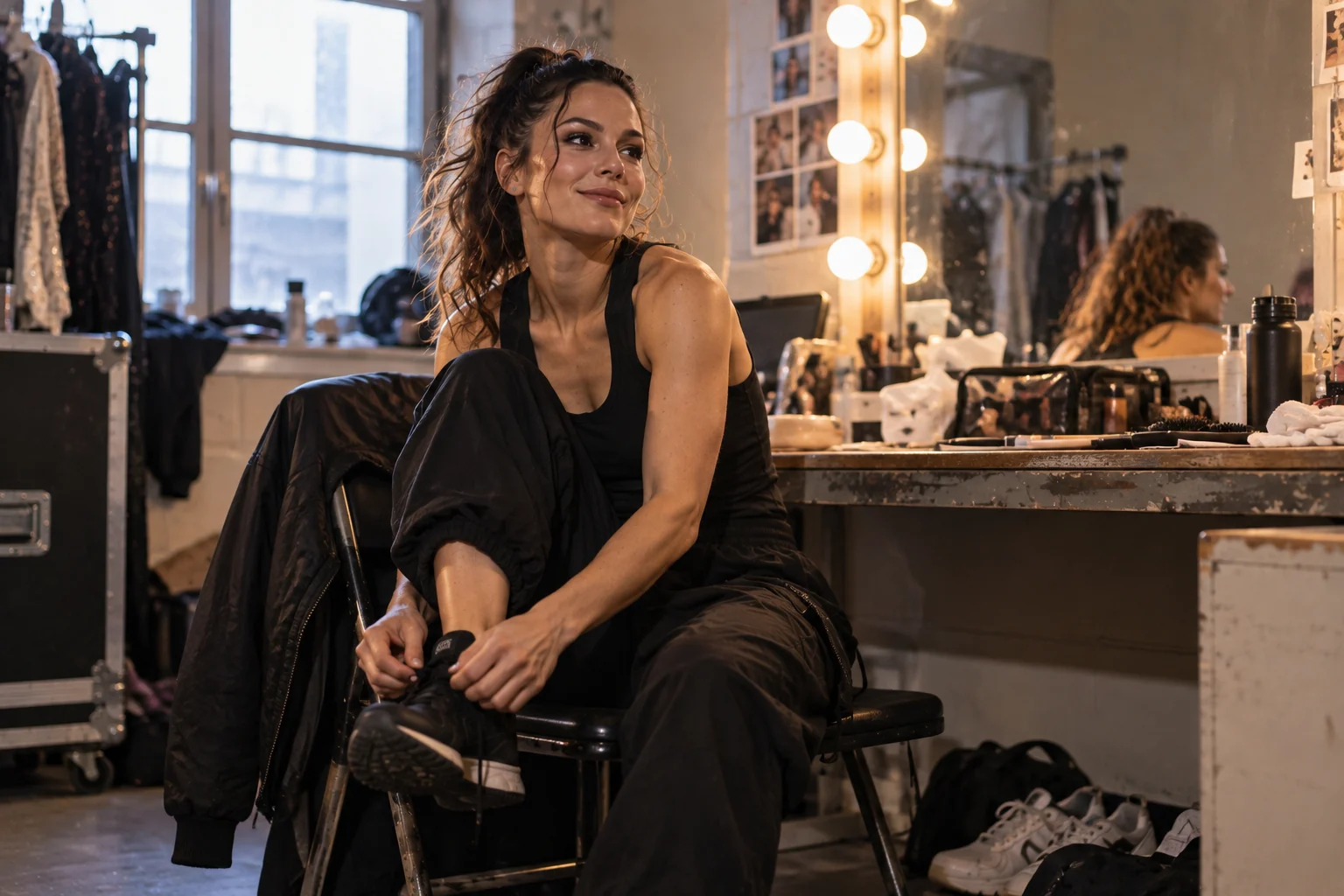
Start with the purpose
Before taking a photograph, decide what it needs to communicate. A profile portrait, a rehearsal image and a performance still answer different questions. A venue should be able to recognise you, see your movement and understand your style without searching through a large folder.
Choose a small selection with a clear job for each image: one simple portrait, one full-length frame and a few examples of your performance. Keep the selection current and representative of your work.
Find useful light
Look at where the light falls before choosing where to stand. Soft window light can be useful for a portrait. In a venue, a stage light may separate you from the background, while a light directly behind you can hide your face.
- Keep your face visible in at least one image.
- Look for a background that does not compete with your outline.
- Check bright areas on skin and dark areas on clothing before continuing.
- Make a test frame and view it at the size someone will see on a phone.
Show the movement clearly
A sharp frame can communicate a position or expression. A little movement blur can communicate pace. Use each deliberately, and make sure your final selection includes an image where posture and technique can be read clearly.
Leave space around hands and feet. Cropping through an extended limb can make a strong moment harder to understand. Review several frames and choose the one that represents the movement accurately.
Keep the edit honest
Adjust exposure and colour to make the image readable, while keeping your appearance recognisable. Avoid edits that change body proportions or turn the venue into something it is not. Ask permission before sharing identifiable images of other performers or guests.
Before sending: can someone recognise you, understand the performance and view the image comfortably on a phone?